Sunday, June 15, 2008

It's Finally Here

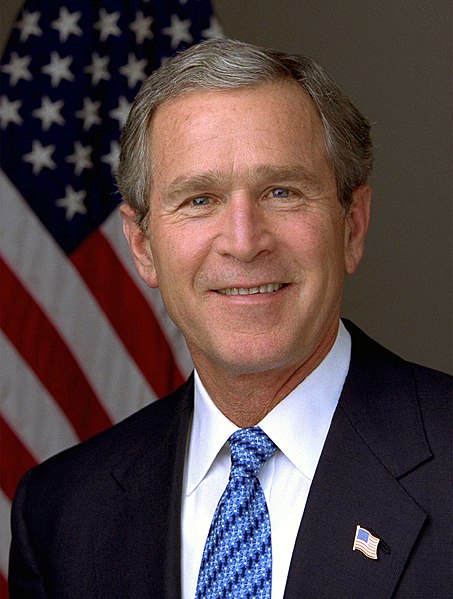
It has been 5 years of fighting in Iraq. The Americans had promised to rid of WMD's, Saddam Hussein, and to liberate the people of Iraq. As we all know, there were no weapons of mass destruction, there was no reason to deploy our troops to Iraq to dismantle Hussein, and we certainly did not liberate the people of Iraq. Truth be told, I find this very hard to grasp because President George W. Bush DOES NOT LIE.

So, people have been dying in vain for 5 years, but don't worry. The French has offered aid to rebuild Iraq, this should be real. FRENCH FOREIGN MINISTER BERNARD KOUCHNER OFFERED TO HELP REBUILD THE COUNTRY AND PROMOTE NATIONAL RECONCILIATION.

The French has opposed the war since the US came forth with it's first proposition to the UN. Dominique de Villepin it clear that France opposes the use of force in Iraq in all its forms including the "disarmament" of WMD's in Iraq. HE DID NOT WANT THIS WAR TO HAPPEN.

Hours after an attack on a US base in Nasiriya, he landed. He met with Shia Vice President Adel Abdul-Mahdi. Adel exiled to France when Saddam ruled Iraq. Kouchner's upcoming events include a French diplomatic office in Irbil, the Kurdish region of Northern Iraq. Arriving in Iraq, he signed an agreement to help the country in its development of nuclear energy.

(source: http://news.bbc.co.uk/2/hi/middle_east/7429074.stm)

Iraq: Players and Haters (cont.)

In 2003, the world was divided into countries that supported or opposed the Iraq war. Let's look at the eight key players of the war.

Colin Powell - Former United States Secretary of State

In February 2003, Former United States Secretary of State Colin Powell came forth to the United Nations with precise and thorough evidence for going to war against Iraq. Such evidence included satellite photos and conversations between Iraqi officials supported the claim that Saddam Hussein was hiding weapons of mass destruction. "Numerous human sources tell us that the Iraqis are moving, not just documents and hard drives, but weapons of mass destruction to keep them from being found by inspectors."

A year later, he confessed that his information on the country's weapons of mass destruction "appears not to be... that solid". After his resignation from United States Secretary of State, he expressed his mistake to be a "blot" on his record. "It will always be a part of my record. It was painful. It's painful now." In 2007, he said, "I tried to avoid this war. I took him through the consequences of going into an Arab country and becoming the occupiers." He tried to dissuade Bush from continuing the war as the country has fell into a civil war.

Dominique de Villepin - Former Prime Minister of France (2005-2007)

Former French Prime Minister Dominique de Villepin stopped a second UN resolution proposed by the US and UK for the use of military force. He expressed his country's opposition to the war in Iraq, "The option of war might seem a priori to be the swiftest. But let us not forget that having won the war, one has to build peace." (UN Security Council February 14, 2003)

France was against a second UN resolution for the use of force in Iraq and the series of disarmament tests proposed by the UK. This led accusations that he was preventing his initial goal. He countered that, "It isn't a matter of according a few more days to Iraq before resorting to force, but to resolutely advance on the path of peaceful disarmament created by the inspections, which are a credible alternative to war." His opposition to the war brought huge popularity to France and helped his campaign to become French Prime Minister.

(source: http://news.bbc.co.uk/2/hi/middle_east/7297592.stm)


Iraq: Players and Haters (cont.)

In 2003, the world was divided into countries that supported or opposed the Iraq war. Let's look at the eight key players of the war.

Hans Blix - Swedish Minister for Foreign Affairs (1978-1979), United Nations Monitoring, Verification, and Inspection Commission (2000-2003)

Blix asked for more time to search for weapons of mass destruction in Iraq, while leading a team of UN weapons inspectors. He accused the US and UK of organizing the war before his work and overestimated the threat of WMD's for the sake of their campaigns. In April 2003, he told, "There is evidence that this war was planned well in advance. Sometimes this raises doubts about their attitude to the [weapons] inspections." He claimed the US's hunt for WMD's to be a "witch-hunt" and their intelligence to be "scandalous" He continues to believe so, expressing in 2007, "I think everything in Iraq after the invasion has been a tragedy. The only positive thing I think is the disappearance of Saddam Hussein."

George W. Bush - President of the US

WAR for three reasons: WMD's, Saddam Hussein's terrorist relations, and to liberate the Iraqi people. He said in March 2003, "The attacks of September 11 2001, show what the enemies of America did with four airplanes. We will not wait to see what terrorists or terrorist states could do with weapons of mass destruction." Bush announced that major combat operations in Iraq were over, after two months of conflict. "The tyrant has fallen, and Iraq is free." In 2007, he sent 20,000 US troops to the lawless regions of Baghdad.
March 2008: "The decision to remove Saddam Hussein was the right decision early in my presidency; it is the right decision at this point in my presidency; and it will forever be the right decision."

Sergei Lavrov - Foreign Minister of Russia

As Russia's ambassador to the United Nations, he opposed the US-led military resolution. "Russia never considered war as an adequate tool to resolve the Iraqi issue," he said. He called the military action "unprovoked" and that it violated the UN charter. Russia's anger is pushing it's relations with the US adrift. He feels withdrawal of international forces and strengthening Iraqi forces are ideal.


(source: http://news.bbc.co.uk/2/hi/middle_east/7297592.stm)


Iraq: Players and Haters

In 2003, the world was divided into countries that supported or opposed the Iraq war. Let's look at the eight key players of the war.

Kofi Annan - UN Secretary General

During the first arguments over Iraq in the UN, Annan appealed against the war. During the first few months of the conflict, the UN's more senior official was killed in a bombing on the UN's headquarters in Baghdad. Annan called this the "darkest day in our lives".

In 2004, he said for the first time that going to war in Iraq without considering other alternatives was illegal. "I have indicated it was not in conformity with the UN charter from our point of view - from the charter point of view - it was illegal," he told the BBC. He said in his final speech in 2006: "No nation can make itself secure by seeking supremacy over others."

Jose Maria Aznar Lopez - Prime Minister of Spain (1996-2004)

Jose Maria Aznar's support for the war in Iraq altered Europe's diplomacy with the US. After a meeting with President Bush in February 2003, he said "There is nothing more dangerous than a political leader who builds castles in the air, and I believe political leaders who raise false hopes, who don't look at the world as it is, are set to reap failure,". A month later, he met with Bush and Blair in a pre-war summit. He lost the 2004 elections and departed with: "The whole world thought Iraq had weapons of mass destruction and they didn't, I know that now. When I didn't know, no-one knew."


Tony Blair - former British Prime Minister

Blair supported the war to remove the weapons of mass destruction in Iraq. Parliament supported his decision to enter the war, however the biggest parliamentary rebellion against a British government followed. He has acknowledged that his decision was wrong, but has not apologised. In 2007, he told The Times: "If there's anything I regret... it is... not having laid out for people in a clearer way what I saw as the profound nature of this struggle and the fact that it was going to go on for a generation."

(source: http://news.bbc.co.uk/2/hi/middle_east/7297592.stm)

Case Closed


Kidnapping is on the rise in Iraq. It is the preferred tactic of choice for terrorists, usually for economic motives rather than political. These crimes are rarely reported in Iraq, and are usually resolved when the ransom money has been paid. With this being so, there is no authority to collate kidnaps. Cedric Turlan explains that since kidnaps are only investigated out of the blue, the mystery of the suspect remains.

"What can I tell you about how I felt at that moment? I thought they were going to kill us. I didn't think they were going to kidnap him." said Reema, speaking about her kidnapped husband, Saif.

"The couple had just driven through a roadblock on the outskirts of the city of Kirkuk on their way back from northern Mosul, where Saif's family lived.

Reema said that Saif had noticed a car suddenly joining the main road from a side road and was immediately suspicious.

"Don't be scared, he told me - we'll get away," Reema recalled him saying cheerily, as he put his foot on the accelerator.

But as the couple's car gathered pace, so did the car following them and as they rounded the next bend, they saw their passage was blocked by several other vehicles - one full of armed men." - BBC News

As the armed men dragged Saif out of the car, Reema begged to be taken with him. However, they told her she could not go with them and to go home.

She was contact by the kidnappers within 48 hours. They requested a ransom of $100,000, a sum they could never grasp with only a small car garage business. Their offer of $20,000 was accepted, but two drop-off attempts were failed. All contact with the gang has been lost. Reema sought help from several police stations, the Red Cross, the American Green Zone and even the prisons for any evidence of her husband.

"We've even been to see a magician," Reema said with a rare laugh, "even though I don't believe in such things. But we just don't know what else to do."

(source: http://news.bbc.co.uk/2/hi/middle_east/7335112.stm)

Thursday, June 12, 2008

"War is a series of catastrophes which result in victory. " - Albert Pike

The U.S. military has claimed that the violence in Iraq is at its lowest since the war. However, the constant unrest in the land has traumatized the civilians. "The scars of the past five years of war and anarchy are visible everywhere. The blue summer sky now shines through the bombed carcass of the telecoms ministry, its poster long since ripped down." Dr. Amir Husain, a psychiatrist, evaluates the damage:
"Before the last war, we faced many psychiatric problems because of the hardship of life under sanctions," he tells me. "After the invasion, everything changed. Some said life was better, some that it was much, much worse."

"I have lost my colleagues, my friends, some of my family... but we are used to it now... our emotions have been frozen"
Most of his patients suffer from anxiety, depression, schizophrenia, or post-traumatic stress disorder.

"Have you seen the people in the streets just after a bomb attack?" he asks me.

"A few minutes afterwards you see them cleaning up, turning the page. For a moment, they cry, they show their anger, but then the Iraqis go and just get on with the job, as they have throughout their history.

The Iraqis have lost their emotions as the "death of one is a tragedy, but the death of a million is a statistic" - Joseph Stalin.

(source: http://news.bbc.co.uk/2/hi/programmes/from_our_own_correspondent/7427372.stm)


"Fallujah - The Hidden Massacre"


The U.S., once again, deceives those dearest to them.... "The US confirmed to my officials that they had not used MK77s in Iraq at any time and this was the basis of my response to you," he told Mr Cohen. "I regret to say that I have since discovered that this is not the case and must now correct the position."

"Fallujah - The Hidden Massacre" is a short documentary that unveils the collusion.

(source: http://www.informationclearinghouse.info/article10907.htm)